Florida developers are choosing long-term equipment rental to preserve capital, improve project cash flow, and access modern construction machinery without the financial burden of ownership.
Long-term equipment rental means securing construction machinery for extended periods—typically three months to several years. You’re not grabbing a skid steer for a weekend. You’re establishing a rental agreement that covers the full duration of a development project, sometimes spanning multiple phases or even multiple projects.
The structure differs significantly from short-term rentals. You negotiate lower monthly rates. You get priority access when you need additional equipment. Most importantly, you build a working relationship with a rental provider who understands your operation and can get equipment to your sites without the last-minute scramble.
For developers working across Florida’s Treasure Coast and Central Florida regions, this model aligns with how construction actually happens here. Projects don’t wrap in two weeks. Residential developments take months. Commercial builds stretch across seasons. Infrastructure work can span years. Long-term machinery rental matches your equipment costs to actual project timelines without locking you into decades of ownership.
A long-term rental agreement typically runs from three months to multiple years, structured around your project scope and equipment needs. We provide the machinery, handle all maintenance and repairs, and you pay a fixed monthly rate. The arrangement is straightforward, but the details determine whether you’re getting real value or just shifting costs around.
In St. Lucie County and Orange County, we structure equipment rental agreements based on equipment type and anticipated usage patterns. An excavator for a large residential development carries different terms than a forklift for commercial warehouse construction. Most agreements include delivery, pickup, routine maintenance, and emergency service coverage. You handle fuel and daily operation. We handle everything that breaks, wears out, or stops working.
The pricing model makes immediate sense when you compare it to ownership. A motor grader that costs $300,000 to purchase might rent for $7,500 monthly. Over twelve months, that’s $90,000—less than one-third of the purchase price. And you’re completely insulated from depreciation, which hammers equipment value the moment it leaves the dealer lot.
What separates long-term from short-term rental is the rate structure. Daily or weekly rentals cost significantly more per day because rental companies need to cover the logistics of constant equipment turnover. Monthly rates drop dramatically. Equipment that rents for $500 daily might cost $8,000 monthly—effectively half the daily rate. For a six-month project, that difference represents real money staying in your operating account.
Florida’s construction environment creates specific considerations that favor long-term rental flexibility. Hurricane season delays projects. Permitting takes longer than anyone wants. Supply chain disruptions still happen. Long-term equipment rental gives you room to adjust timelines without the pressure of owned equipment sitting idle while you’re waiting on inspections, materials, or weather windows. You’re paying for productive equipment during active construction phases, not for idle machines during delays.
The maintenance component deserves serious attention. When you own equipment, every breakdown becomes your emergency. You’re paying for the service truck, the technician, the parts, and the downtime while your project schedule slips. With long-term rental, we handle it. Our business model depends on equipment uptime, so response times tend to be quick and effective. For developers juggling multiple projects across different sites, eliminating equipment maintenance management from your daily concerns has value that extends beyond the line item cost.
Not every piece of construction equipment belongs in a rental agreement, and not everything should be owned. The decision comes down to utilization rates, project types, and honest assessment of how consistently you can keep specific machinery productive and generating revenue.
Core equipment that runs continuously across multiple projects—that’s where ownership might still make sense. A pickup truck your crew uses daily. Basic hand tools and small equipment. Maybe a compact excavator if you’re running continuous site work with reliable utilization. But here’s what the data shows: most contractors significantly overestimate how much they’ll actually use specialized equipment.
Industry research consistently demonstrates that achieving 80% utilization on owned equipment is extremely difficult in real-world conditions. Most well-managed fleets run closer to 50-60% utilization. That means your $200,000 excavator sits idle 40-50% of the time, still generating costs in depreciation, insurance, storage, and periodic maintenance. Long-term machinery rental eliminates utilization risk entirely—you’re only paying when equipment is actually on your project.
Heavy earthmoving equipment like bulldozers, large excavators, and motor graders are prime candidates for long-term rental. These machines cost $150,000 to $500,000 new. They demand significant maintenance investment. And unless you’re operating a massive development company with continuous pipeline work, you simply cannot keep them busy enough to justify the capital outlay and ongoing ownership costs.
Aerial equipment represents another category where rental consistently outperforms ownership. Boom lifts, scissor lifts, telehandlers—these are phase-specific machines. You need them for particular construction stages, then they sit. A 40-foot boom lift might cost $40,000 to purchase but only $1,200 monthly to rent. If you need it three months per year, you’re spending $3,600 in rental versus $40,000 in purchase price plus ongoing maintenance, insurance, and storage.
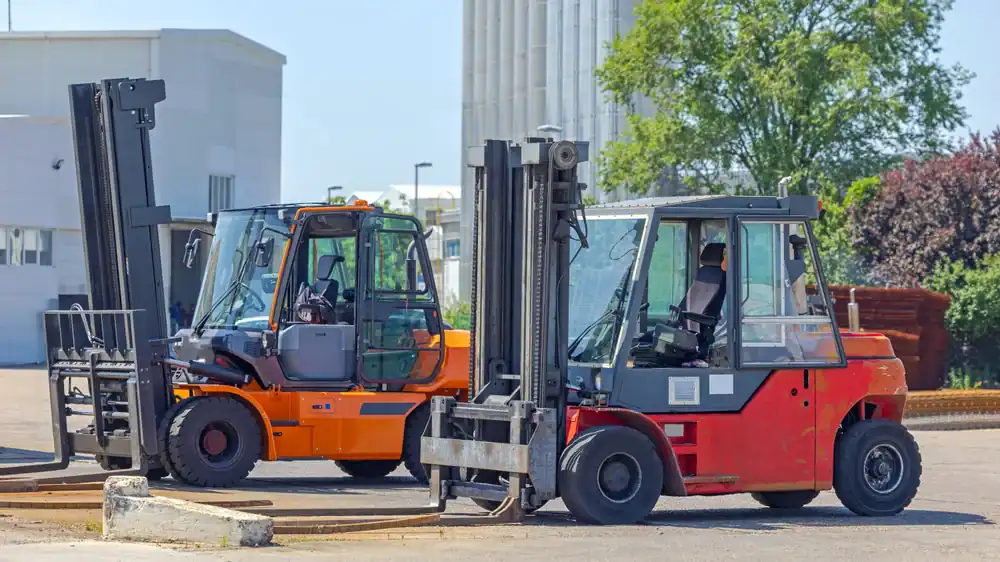
Forklifts fall into interesting territory. If you’re running warehouse operations or have continuous material handling requirements, ownership could make financial sense. But for construction sites where forklift needs fluctuate based on delivery schedules and project phases, long-term rental provides the flexibility without the commitment. You can scale up during heavy material delivery periods and scale back during finishing phases when forklift needs drop.
Specialized equipment almost always favors rental economics. Concrete pumps, cranes, trenchers, compaction equipment—these serve specific purposes for limited timeframes. Buying them means you’re betting you’ll secure enough future work to justify the investment. Renting means you have access exactly when projects require it and zero carrying costs when you don’t.
The calculation shifts in Florida’s market based on seasonal realities too. Summer rainy season slows outdoor work. Hurricane season can shut down projects completely. Owning equipment during these predictable slow periods means you’re still paying for machines that aren’t generating any revenue. Long-term rental agreements can often be structured with flexibility for weather-related delays—something your equipment loan officer won’t care about when the monthly payment comes due.
Want live answers?
Connect with a Tool Rental and Heavy Equipment LLC expert for fast, friendly support.
ROI on construction equipment isn’t just about comparing sticker prices. It’s about total cost of ownership versus total cost of rental over the actual timeframe you need the machinery working on your projects.
When you buy equipment, you’re looking at purchase price, financing costs, insurance, maintenance, repairs, storage, depreciation, and opportunity cost of capital. When you rent long-term, you’re looking at monthly rental fees and operational costs like fuel. The gap between those two numbers—calculated honestly—tells you which direction makes financial sense for your operation.
Let’s work with real numbers from Florida’s equipment market. A mid-size excavator costs approximately $120,000 to purchase. Finance it over five years at 6% interest, and you’re paying roughly $2,300 monthly. Add insurance ($150/month), storage ($200/month), and maintenance ($300/month), and you’re at $2,950 monthly in fixed costs before the machine turns a single bucket of dirt. That same excavator rents for approximately $4,500 monthly with maintenance and service included.
Ownership costs extend far beyond the monthly payment, and this is where the financial analysis gets interesting. Depreciation hits immediately and relentlessly. That $120,000 excavator loses 15-20% of its value the moment it’s delivered to your site. After five years of use, even with excellent maintenance, it might be worth $50,000. You’ve lost $70,000 in value, which works out to $1,167 monthly in depreciation alone—a real cost that doesn’t show up on your operating statement but absolutely impacts your actual return.
Maintenance costs vary by equipment type and usage intensity, but budget at least $200-$400 monthly for routine service on heavy construction equipment. That covers oil changes, filters, inspections, and minor repairs. Major repairs are entirely separate. A hydraulic system failure can cost $5,000-$15,000. An engine rebuild runs $20,000-$40,000. These aren’t daily occurrences, but they happen with enough frequency that you need to factor them into your ownership calculations. And they’re entirely your financial responsibility as the owner.
Storage is consistently overlooked in ownership calculations. If you’re paying for secure yard space or covered storage to protect equipment from Florida’s intense sun, humidity, and storm exposure, that’s $100-$500 monthly depending on location and equipment size. Leave equipment outside unprotected, and you’re accelerating wear, rust, and depreciation. Either way, you’re paying—either in direct storage costs or in accelerated equipment degradation.
Insurance costs depend on equipment value and your coverage levels. Figure $100-$300 monthly for comprehensive coverage on a $120,000 machine. Some developers try to reduce costs with minimal coverage, but that’s a significant risk. One theft incident or major damage event without proper insurance can eliminate years of careful cost savings in a single day.
Transportation costs add up quickly when you own equipment and need to move it between job sites. Moving a large excavator between projects costs $800-$1,500 each time. If you’re working on three different developments over six months, that’s $2,400-$4,500 in transport costs alone. We typically include delivery and pickup in our monthly rates or charge flat fees that are usually lower than what you’d pay arranging independent transport.
Financing costs deserve careful attention. Even if you pay cash for equipment, there’s a real opportunity cost. That $120,000 tied up in an excavator isn’t available for project deposits, material purchases, payroll, or other investments that might generate better returns. If you finance the purchase, you’re paying interest—potentially $30,000-$40,000 over a five-year loan term. That’s real money that doesn’t appear in the purchase price but absolutely impacts your actual ROI.
The utilization factor is where equipment ownership most often fails the financial analysis. If you’re using that excavator 60% of the time—which is actually above average—you’re still paying 100% of the ownership costs every month. Rental services charge you only for the months you actually need the equipment on your projects. When a project wraps early or gets delayed by permitting or weather, you return the rental and stop paying. Your owned equipment keeps generating costs regardless of whether it’s working or sitting idle in your yard.
Cash flow separates thriving developers from those constantly scrambling to make payroll and cover expenses. Long-term equipment rental keeps cash available for the activities that actually grow your construction business—securing new projects, hiring skilled labor, purchasing materials, and managing the inevitable surprises that hit every development.
When you rent equipment long-term, you’re converting a capital expenditure into an operating expense. Instead of dropping $120,000 on an excavator purchase, you’re paying $4,500 monthly. That preserves $115,500 in working capital immediately. For most developers, especially those growing their operations, that capital makes the difference between bidding on one project or three—or between taking on a larger project that requires bigger upfront material purchases.
Banks and lenders evaluate your financial position differently when you’re renting versus buying equipment. Owned equipment appears as an asset on your balance sheet, but it’s also debt if financed, which impacts your debt-to-income ratios. Rental agreements are operating expenses that don’t affect your borrowing capacity the same way. This can improve your ability to secure financing for land acquisition, project funding, or business expansion when opportunities arise.
Tax treatment favors equipment rental in the short term. Rental payments are fully deductible as business expenses in the year you pay them. Equipment purchases must be depreciated over several years, or you can take Section 179 deductions up to certain limits. But rental gives you the full deduction immediately, which can significantly reduce your tax liability during profitable years when you need that benefit most.
Seasonal cash flow challenges are predictable in Florida’s construction environment. Summer storms slow outdoor work. Holiday periods see reduced activity. Long-term rental agreements can sometimes be structured with flexibility for these predictable slow periods, whereas equipment loans require the identical payment every month regardless of your actual revenue.
Project-based cash flow also benefits substantially from rental services. You start paying for equipment when the project starts generating revenue. You stop paying when the project ends or that equipment is no longer needed. With owned equipment, you’re making payments before the first permit is approved and continuing long after the final inspection. That misalignment between equipment costs and project revenue creates cash flow pressure that rental eliminates.
The ability to scale your equipment fleet up and down based on actual project demands—without the cash flow impact of buying and selling—gives you competitive advantages in bidding and project execution. When you win a significant project, you can quickly secure the construction equipment and machinery you need without depleting your cash reserves. When work slows, you’re not stuck with idle equipment steadily draining your operating accounts.
For developers managing multiple projects across St. Lucie County and Orange County, this flexibility proves particularly valuable. You might need two excavators for a large site development in Port St. Lucie, a forklift for commercial construction in Orlando, and a boom lift for a multi-story project in Fort Pierce. Long-term rental lets you match your equipment costs precisely to your active project portfolio without the capital outlay of buying four machines that won’t all be needed simultaneously across your schedule.
The decision between long-term equipment rental and equipment purchase isn’t about which option is universally superior. It’s about which approach makes financial sense for your specific operation, your project pipeline, and your growth objectives.
Long-term equipment rental delivers capital preservation, cash flow flexibility, and freedom from maintenance headaches. It provides access to modern, well-maintained construction equipment without the long-term financial commitment and depreciation risk that comes with ownership. For many developers working in Florida’s dynamic construction market—particularly in growing regions like St. Lucie County and Orange County—that combination of benefits outweighs the traditional appeal of owning assets.
The ROI analysis typically favors rental services when you honestly assess utilization rates, factor in all ownership costs beyond the purchase price, and consider the opportunity cost of capital tied up in equipment that sits idle between projects. The numbers tell a clear story, but you need to run them with real data from your own operation and actual project timelines.
If you’re evaluating equipment needs for upcoming projects in St. Lucie County, Orange County, or anywhere across Florida, we can walk through the specific costs and rental options for your situation. Sometimes the conversation confirms what you already suspected about your equipment strategy. Other times, it reveals opportunities you hadn’t considered. Either way, making informed equipment decisions based on actual costs, realistic utilization, and honest financial analysis puts you in a stronger position to deliver projects on time, on budget, and with better overall profitability.
Summary:
Article details:
Share: