Concrete Polishers St. Lucie & Orange County, FL

The Right Polisher. The Right Power Source.

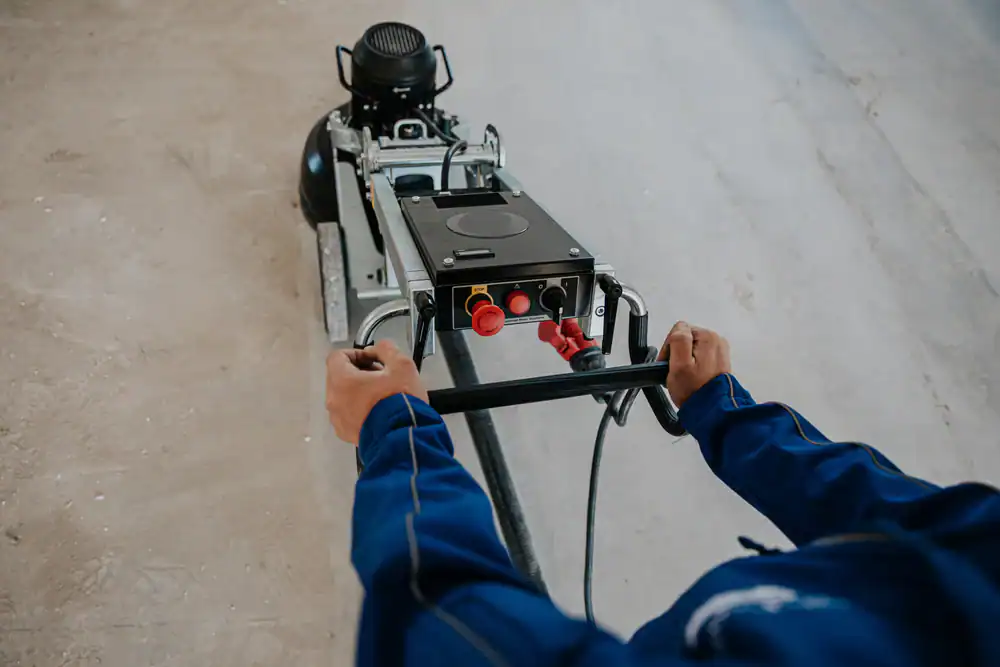
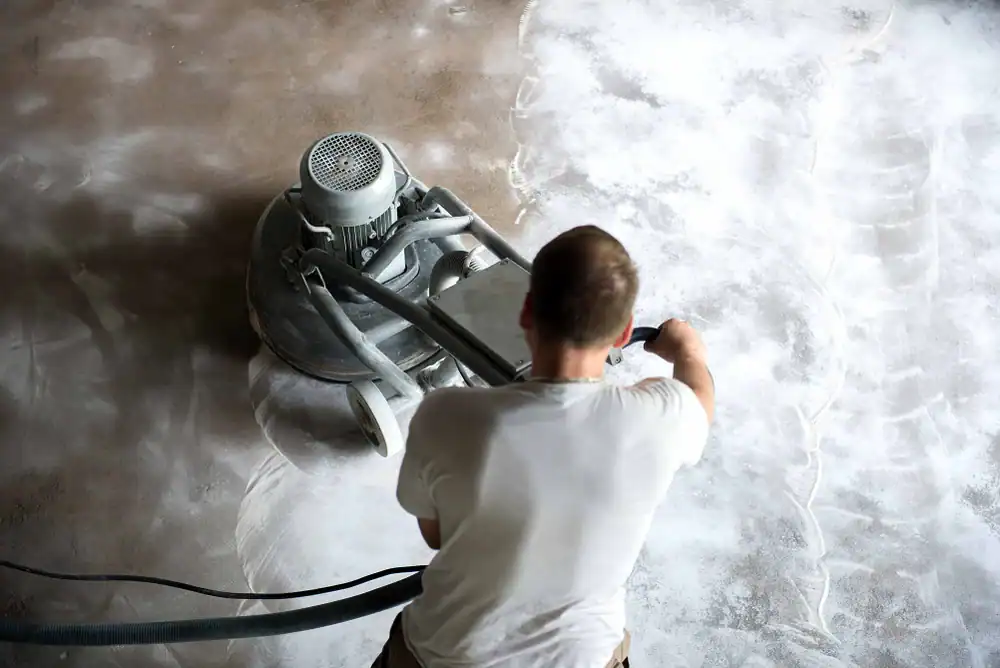
You need equipment that works where your job is—not where it’s convenient for the rental company. We stock electric and propane concrete polishers in sizes from 20″ to 32″, ready when you need them.

Electric and Propane Concrete Polisher Rentals in St. Lucie & Orange County, FL

Equipment That Matches Your Jobsite Reality

Concrete polishing jobs don’t all look the same. Some sites have three-phase power and HVAC systems running. Others are open slabs with no electrical hookup for another month. Some are 800 square feet. Others are 40,000.

That’s why we stock both electric and propane concrete polishers in multiple sizes. A 20-inch electric polisher makes sense for residential bathroom floors or tight commercial spaces. A 32-inch propane unit handles warehouse floors where you’re covering serious square footage and power access is hit or miss.

You know what your job needs. We make sure you can get it without buying a $15,000 machine that sits in your shop eleven months a year.

Both Power Options Available

Electric models for indoor work with power access. Propane units for outdoor sites or spaces without electrical. You choose based on your actual jobsite conditions.

Multiple Sizes in Stock

From 20-inch machines for tight residential spaces to 32-inch polishers for large commercial floors. The right size means better productivity and lower labor costs.

Maintained and Job-Ready

Every polisher is inspected and maintained before it leaves. You’re not gambling on whether the equipment will hold up through your timeline.

Tool & Machinery Rental Services Florida

Full Range of Equipment for Every Phase
Why Rent Concrete Polishers in Orange County, FL

What You Actually Get From the Right Equipment

The difference between finishing on schedule with margin intact and eating costs because your equipment couldn't keep up with the job.

You can bid on jobs regardless of power availability, because you have access to both electric and propane options.
Your crew covers more square footage per day with properly sized equipment, cutting labor hours and keeping timelines tight.
You avoid tying up capital in equipment purchases, maintenance contracts, and storage space for machines that don’t run every week.
You can work in occupied buildings with electric models that produce zero emissions, or outdoor sites with propane units.
Your project risk drops because you’re using maintained equipment, not hoping your owned machine doesn’t break down mid-job.
You can scale your polishing business up or down based on actual demand without the fixed costs of ownership.

Choosing Electric vs. Propane Concrete Polishers

Power Source Matters More Than You Think

Electric concrete polishers work great when you have the right power and you’re working indoors. They’re quieter, produce no exhaust, and you can use them in occupied spaces without ventilation concerns. Most run on 220-240V single-phase power, though larger commercial units might need three-phase.

Propane concrete polishers eliminate the power question entirely. No cords. No hunting for the right outlet or waiting on an electrician to wire a panel. You show up, fuel up, and start grinding. They work anywhere with adequate ventilation—outdoor slabs, parking structures, warehouses during construction phases.

20", 25", 30", and 32" Polisher Sizes

Size Directly Affects Your Labor Costs

A 20-inch electric polisher is built for residential jobs, small commercial spaces, and anywhere you need maneuverability more than raw coverage speed. Bathrooms, kitchens, retail fitting rooms, tight hallways. You’re trading speed for access. Production rate runs around 400-500 square feet per hour with an experienced operator.

A 25-inch polisher sits in the middle. Still maneuverable enough for most doorways and moderate spaces, but with better coverage than the 20-inch models. Good for small-to-mid-size commercial jobs—offices, restaurants, boutique retail.

30-inch and 32-inch concrete polishers are where you go for serious square footage. Warehouses, distribution centers, big-box retail, parking structures, large commercial lobbies. These machines cover ground fast—some hit 500+ square feet per hour—but they need space to operate and they’re heavier.

Using a 20-inch polisher on a 10,000 square foot warehouse floor is a math problem that ends with blown labor budgets. Using a 32-inch machine in a 600 square foot residential space means you’re fighting the equipment the whole time. The right size isn’t about what’s available. It’s about what actually makes sense for the square footage and layout you’re working with.

Frequently Asked Questions

We're here to provide clear and helpful answers

Explore our FAQs to learn more about our process, pricing, and how we ensure quality, transparency, and client satisfaction at every stage.
Size determines coverage speed and maneuverability. A 20-inch electric polisher is built for smaller jobs and tight spaces—residential floors, small commercial areas, anywhere you need to navigate around obstacles or fit through standard doorways easily. You’ll cover around 400-500 square feet per hour. A 32-inch polisher is designed for large commercial or industrial floors where you’re grinding thousands of square feet. It covers more area per pass, so your labor costs drop on big jobs, but it’s heavier and needs more operating space. The rule: match the machine size to your square footage and layout. Using a small polisher on a huge floor kills your productivity. Using a massive polisher in a tight residential space makes the job harder than it needs to be.
Electric concrete polishers make sense when you’re working indoors with reliable power access and you need zero emissions. Occupied office buildings, retail stores, medical facilities, schools—anywhere people are present or ventilation is limited. Most electric models run on 220-240V single-phase power, which is available at most commercial sites. Propane concrete polishers are the better choice when you’re working outdoors, on new construction slabs without electrical hookups, or in large open spaces with good ventilation. Propane units eliminate the need for power cords, generators, or waiting on electricians to set up panels. The tradeoff is noise and exhaust—you can’t run propane equipment in tight or occupied indoor spaces. Most contractors rent based on jobsite conditions, not preference. If the site has power and you’re indoors, go electric. If power is limited or you’re outside, go propane.
Production rates depend on machine size, concrete hardness, the level of polish you’re achieving, and operator experience. A 20-inch polisher typically covers 400-500 square feet per hour. Larger machines—25-inch, 30-inch, or 32-inch models—can hit 500-750+ square feet per hour on open floors with experienced operators. But that’s under good conditions. If you’re working around columns, dealing with very hard concrete, or going for a high-gloss finish that requires multiple passes with finer grits, your rate drops. Most contractors estimate conservatively and plan for obstacles. The real advantage of renting the right-sized equipment is that you’re not fighting a machine that’s too small for the job or too big for the space. Your crew works efficiently, and you finish on schedule without surprise labor overruns.
Most electric concrete polishers run on 220-240V single-phase power, which is common at commercial and industrial sites. Some larger models require three-phase power, which isn’t always available, especially on residential jobs or early-stage construction sites. Before you rent, confirm what power is actually available where you’re working. If the site only has standard 110V outlets, you’ll either need a generator or you’ll want to rent a propane concrete polisher instead. Propane units eliminate the power question entirely—no cords, no voltage requirements, no waiting on electricians. Just fuel and ventilation. If you’re not sure about your site’s electrical setup, ask before you commit to an electric model. Showing up with equipment that can’t plug in costs you time and money.
Renting makes sense when you don’t have consistent, high-volume polishing work that justifies owning a machine. Concrete polishers range from $8,000 for smaller models to $40,000+ for commercial-grade equipment. Add maintenance, repairs, storage, and depreciation, and you’re looking at serious fixed costs. If you’re doing occasional polishing jobs, taking on a one-off project outside your normal scope, or need a backup machine while yours is in the shop, renting protects your capital and eliminates the ownership burden. If you’re running multiple polishing crews every week and the equipment pays for itself in a few months, buying might make sense. But most contractors rent because it gives them flexibility—they can match the machine size and power type to each specific job without being locked into one piece of equipment that doesn’t fit every situation.
Yes. We offer daily, weekly, and monthly rental rates so you can match the rental period to your actual project timeline. A small residential job might only need the equipment for two or three days. A large commercial polishing project could run for weeks. You shouldn’t have to pay for a full week when you only need two days, and you shouldn’t be stuck with daily rates when you’re renting for a month. Flexible terms mean you’re paying for what you actually use. If your timeline changes mid-project—other trades run late, weather delays outdoor work, or the scope expands—you can adjust your rental period instead of being locked into a rigid contract. The goal is to support your project, not force your schedule to fit our rental terms.
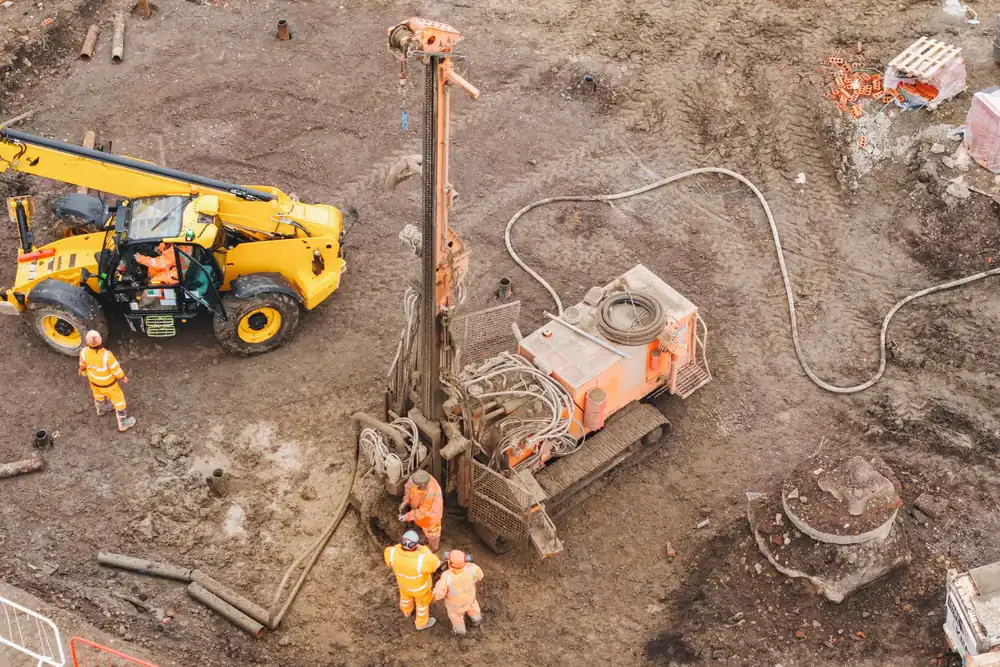
Aerial view of three construction workers in orange safety gear operating heavy drilling machinery—available through equipment rental St. Lucie & Orange County, FL—on a muddy site, with a yellow vehicle parked nearby.